Featured
Table of Contents
That liberates cash in the short-term, and you may have 3 to four years to save toward the settlement amount. Extremely dangerous to credit report, primarily because of missed payments and an adverse "resolved" mark that can remain on your credit score record for as much as seven yearsMay be only option if other alternatives (financial obligation consolidation, balance transfer credit report cards, financial obligation mercy) aren't possibleTypically calls for a charge to the 3rd party, which might offset some or all of the financial savings from financial debt settlementMay aid you avoid bankruptcy if you've missed a number of paymentsNot all creditors function with financial obligation negotiation companies Financial debt mercy might be best for you if you are experiencing a financial hardship that makes it nearly difficult to pay down your financial debt balances.

With a DMP, you make one monthly settlement to the credit report counseling firm. Those funds are then distributed to lenders of your unprotected financial debts, such as bank card and installment financings. The company deals with your financial institutions to decrease rates of interest or waive costs, yet some creditors may reject such concessions.
It can aid you pay down debt if you're able to secure a financing rate that's reduced than the ordinary rate of the accounts you're consolidating. You need to refrain from racking up financial obligation on those recently cleared accounts or your financial debt could grow also higher.
These cards typically use a 0% passion introductory period of approximately 21 months. That gives you lots of time to get rid of or dramatically lower your equilibrium while making interest-free payments. For some people dealing with insurmountable financial debt, insolvency might be the only method to quit collection process and lawfully solve their debts.
Getting My Is Bankruptcy Make Sense for Everyone To Work
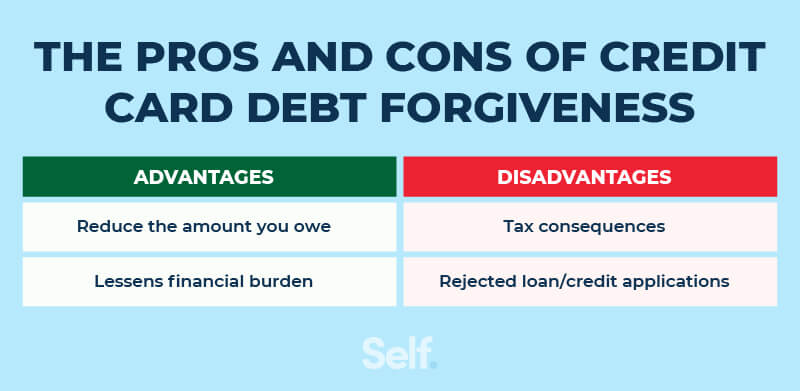
You may need it if your creditor or a collection company ever before attempts to accumulate on the financial obligation in the future. The letter can confirm you don't owe what the debt collector's documents reveal. Yes, for the most part, the IRS considers forgiven debt as taxable income. When a loan provider forgives $600 or even more, they are called for to send you Kind 1099-C.
Debt mercy or negotiation often hurts your credit score. Anytime you work out a financial debt for less than you owe, it might look like "cleared up" on your debt record and impact your credit report for 7 years from the day of negotiation. Your credit can likewise go down considerably in the months resulting in the forgiveness if you fall back on payments.
Getting The Staying Safe from Fraudulent Schemes To Work
Tax obligation financial debt compromise programs Tax financial debt occurs when the quantity of taxes you owe surpasses what you have actually paid. This situation often results from underreporting revenue, not filing returns on time, or disparities discovered throughout an IRS audit. The consequences of building up tax obligation debt are severe and can include tax liens, which offer the IRS a legal case to your building as protection for the financial debt.
Higher rates of interest on available credit. Incomes and Bank Accounts IRS can levy (confiscate) earnings and savings account to please the debt. Reduced revenue and interruption of vital monetary processes. Property Seizure In severe cases, the internal revenue service can take and offer residential or commercial property to cover the financial debt. Loss of important properties and prospective variation.
Clinical depression, stress and anxiety, and various other mental wellness issues. Social Preconception Encountering lawsuit from the internal revenue service can bring social preconception. Damage to online reputation and partnerships. Work Opportunities A poor credit history as a result of strain financial obligation can restrict employment possibilities. Problem searching for or keeping a work. Government Benefits Tax debt might affect qualification for federal government advantages, such as Social Safety And Security and Medicaid.
Post-Forgiveness Services Including Community Support Fundamentals Explained
The OIC takes into consideration numerous elements, including the taxpayer's income, expenses, property equity, and ability to pay. Efficiently discussing an OIC can be complex, calling for a detailed understanding of the internal revenue service's guidelines and a strong disagreement for why your deal lines up with your capability to pay. It is very important to note that not all applications are accepted, and the process requires comprehensive monetary disclosure.
The IRS evaluates your general monetary situation, including your revenue, expenses, property equity, and capability to pay. You have to additionally be existing with all filing and settlement requirements and not remain in an open personal bankruptcy proceeding. The IRS also considers your compliance history, assessing whether you have a document of timely declaring and paying tax obligations in previous years.
See This Report about Compliance Considerations Concerning Credit Counseling Services : APFSC Help for Debt Management
The application procedure for a Deal in Compromise entails a number of thorough actions. Initially, you must finish and send IRS Type 656, the Offer in Compromise application, and Type 433-A (OIC), a collection details statement for people. These forms require comprehensive financial information, including details concerning your earnings, debts, expenses, and assets.
Back tax obligations, which are unpaid taxes from previous years, can dramatically raise your complete IRS debt otherwise addressed without delay. This financial obligation can accrue passion and late settlement fines, making the initial quantity owed a lot bigger with time. Failure to pay back taxes can result in the IRS taking enforcement activities, such as releasing a tax obligation lien or levy versus your home.
It is very important to attend to back taxes as soon as possible, either by paying the sum total owed or by arranging a layaway plan with the IRS. By taking positive steps, you can avoid the build-up of additional passion and penalties, and avoid much more hostile collection activities by the IRS.
One usual factor is the belief that the taxpayer can pay the sum total either as a lump sum or via a settlement strategy. The IRS also thinks about the taxpayer's revenue, expenditures, property equity, and future earning capacity. If these aspects indicate that the taxpayer can afford to pay greater than the offered amount, the internal revenue service is most likely to decline the deal.
The Main Principles Of Is Credit Counseling Services : APFSC Help for Debt Management Right for Your Family
It is vital to give precise and complete info in your application and to seek advice from a tax expert to boost the chances of acceptance. Managing IRS financial obligation can be complicated and difficult. Tax specialists, such as CPAs, tax obligation lawyers, or registered representatives, can give important aid. They have the knowledge to navigate the complexities of tax obligation legislation and internal revenue service procedures.

Table of Contents
Latest Posts
Everything about Being Cautious from Bankruptcy Counseling Fraud
The Single Strategy To Use For True Testimonials of People Who Achieved Freedom
The 7-Minute Rule for Building a Personalized Route to Relief
More
Latest Posts
Everything about Being Cautious from Bankruptcy Counseling Fraud
The Single Strategy To Use For True Testimonials of People Who Achieved Freedom
The 7-Minute Rule for Building a Personalized Route to Relief